
The 5V design competition by Haworth challenges participants to interpret an architectural project through fashion. DOLINA took inspiration from the Prescott West Oakland project, which the team has been involved with in various capacities over the past four years.

The past century has brought major transformation to the Prescott neighborhood in West Oakland. Shipping & manufacturing industries drew people here during the Great Migration, which gave rise to a vibrant and dynamic culture. The community was heavily impacted by discriminatory urban planning projects in the 1950s and 60s. This blatant and tragic environmental injustice helped give rise to movements such as the Black Panther Party and Students for a Democratic Society, among others, who fought for their visions of a fairer future. The Loma Prieta earthquake of 1989 provided an unexpected opportunity for justice, toppling the Cypress Freeway that had long bifurcated West Oakland. However, despite the public attention and subsequent efforts to rebuild the community, the neighborhood continued to suffer from disinvestment. Eventually, the old warehouses (such as these two, built in 1923 on either side of a curved rail spur) were leased out to artists and artisans, who were attracted to the area’s affordability and proximity to San Francisco. The 1990s-2010s saw the rise of a prolific community of creatives, who benefited from the flexibility of these old, industrial spaces. However, this flexibility proved to be a double-edged sword: following the Ghost Ship fire of 2016, landlords of similar ad-hoc arts spaces decided to put the buildings on the market rather than pursue necessary life-safety upgrades (which, in some cases, had long been requested by tenants).
Across the US, buildings very similar to these have been purchased by national real estate development companies and subsequently demolished to make way for countless cookie-cutter condo buildings. Here in Prescott, the properties were purchased by local developer SRMErnst, who are invested in invigorating the community and committed to a vision that is economically, ecologically, and culturally sustainable. Existing building stock is being honored as it is upgraded, maintaining the textural fabric of the neighborhood. High-pollution commercial activities like trucking are being replaced by advanced manufacturing, with new tenants who are on the vanguard of finding innovative solutions to the climate crisis. Xeriscaping and shade trees throughout the campus will improve both air and water quality. A weekly farmers’ market and a hotly anticipated food hall provide opportunities for neighbors to gather over a shared meal, in keeping with the age-old traditions by which communities are formed.
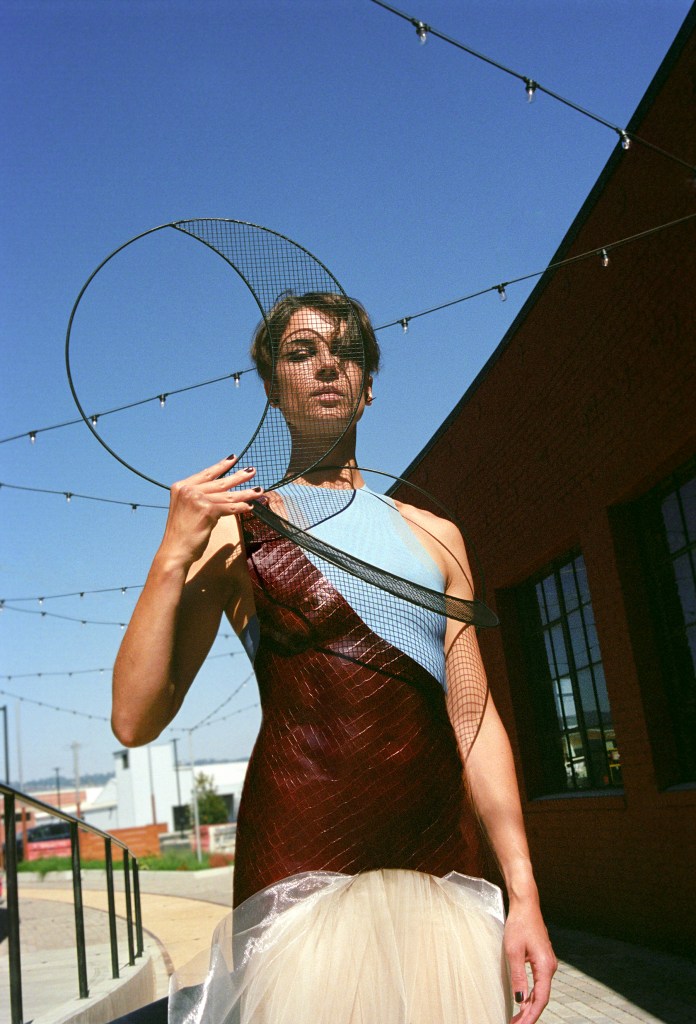
In thinking about the past 100 years, we looked to men’s & women’s fashions from the mid-1920s and juxtaposed those silhouettes with contemporary styling and materials. This design combines molded embossed leather with delicate tulle & organza into something both structured and soft, guarded and vulnerable. The result is something like a punk version of Art Deco – elegant, yet bold, unapologetic, and textural, with materials echoing the tones and textures of the buildings and environment. By creating harmony between contrasting elements, this design suggests that one path to strength is through establishing a common goal from disparate origins. If this community is to avoid the fate of its previously vibrant iterations, we need to continue the decades-long tradition of looking out for each other and celebrating the beautiful variety of voices here.
Change is the only constant. The best option we have is to look ahead of the curve, and direct the change in ways that benefit and build communities. So long as we maintain a culture of care, collaboration, and stewardship, the community will have the chance to maintain a cohesive identity, even as the specific makeup evolves and changes.

Photography: Renee Friedrich, HÉLÈNE Agency & Creative Büro
Production Assistance: John Friar III
Design/Fabrication, HMU, Model: Alisa Nadolishny, DOLINA; Job Captain on the Prescott West Oakland project during previous employment at FORGE
Architect: FORGE
Featuring the P22 Armchair by Patrick Norguet for Cassina, Haworth Collection, and the SUMO mini by DOLINA.
 dolina