
winner of the 2019 AIA CA Emerging Professionals design competition
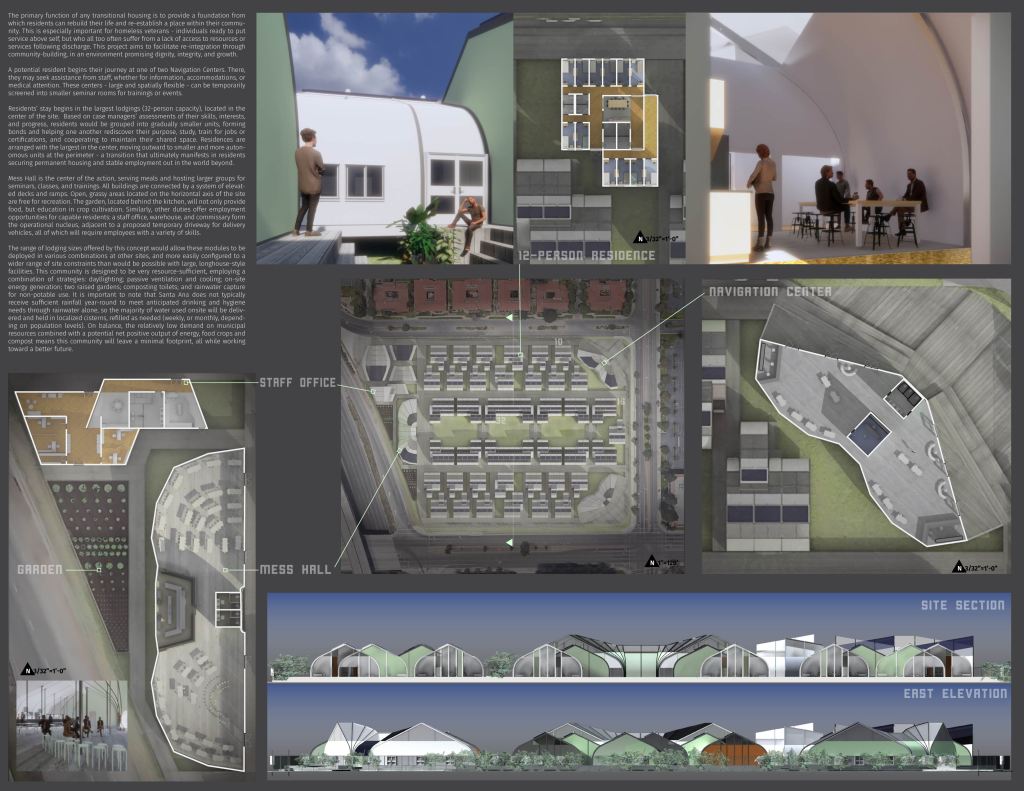
This competition challenged young professionals to design transitional housing for veterans experiencing homelessness, utilizing the Sprung Structures modular construction system.
The primary function of any transitional housing is to provide a foundation from which residents can rebuild their life and re-establish a place within their community. This is especially important for homeless veterans – individuals ready to put service above self, but who all too often suffer from a lack of access to resources or services following discharge. This project aims to facilitate re-integration through community-building, in an environment promising dignity, integrity, and growth.
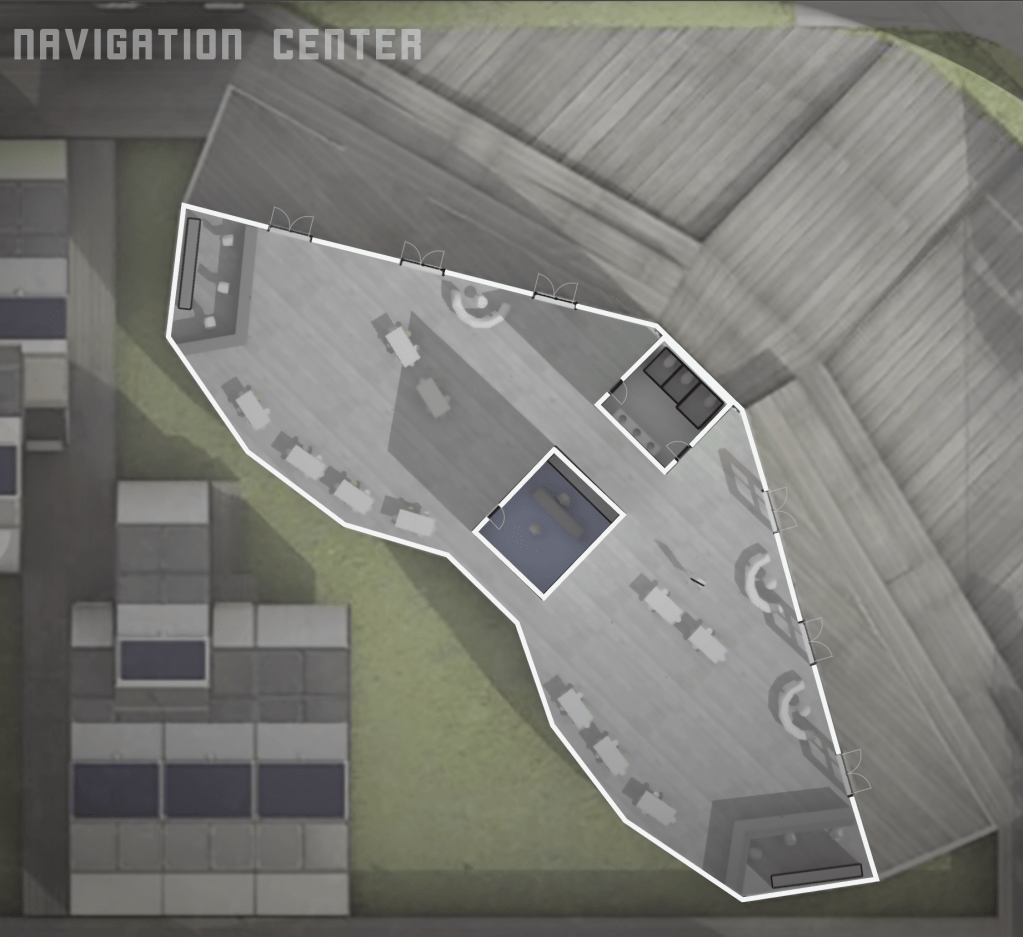
A potential resident begins their journey at one of two Navigation Centers. There, they may seek assistance from staff, whether for information, accommodations, or medical attention. These centers – large and spatially flexible – can be temporarily screened into smaller seminar rooms for trainings or events.
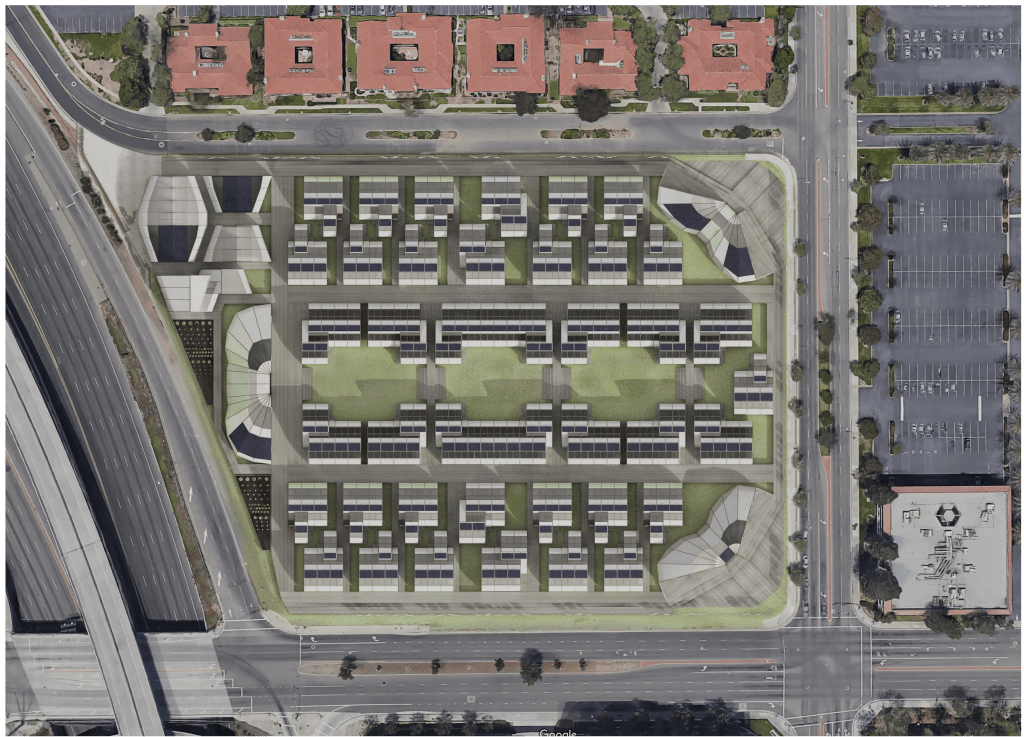
Residents’ stay begins in the largest lodgings (32-person capacity), located in the center of the site. Based on case managers’ assessments of their skills, interests, and progress, residents would be grouped into gradually smaller units, forming bonds and helping one another rediscover their purpose, study, train for jobs or certifications, and cooperating to maintain their shared space. Residences are arranged with the largest in the center, moving outward to smaller and more autonomous units at the perimeter – a transition that ultimately manifests in residents securing permanent housing and stable employment out in the world beyond.
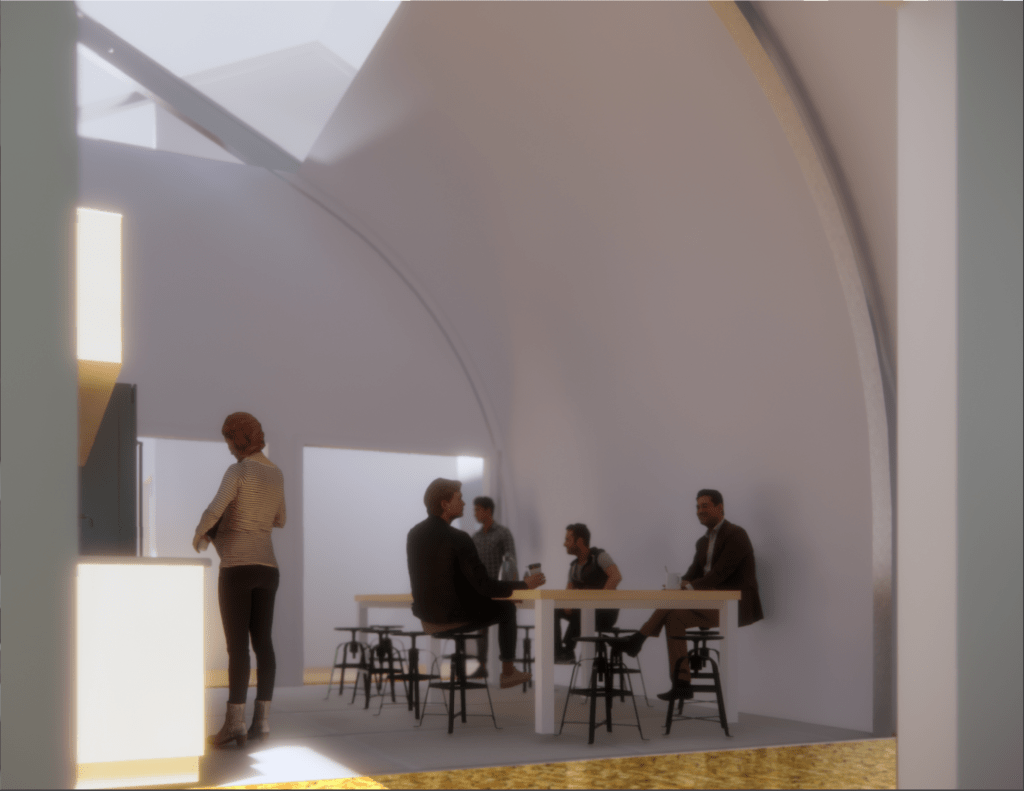
Mess Hall is the center of the action, serving meals and hosting larger groups for seminars, classes, and trainings. All buildings are connected by a system of elevated decks and ramps. Open, grassy areas located on the horizontal axis of the site are free for recreation. The garden, located behind the kitchen, will not only provide food, but education in crop cultivation. Similarly, other duties offer employment opportunities for capable residents: a staff office, warehouse, and commissary form the operational nucleus, adjacent to a proposed temporary driveway for delivery vehicles, all of which will require employees with a variety of skills.
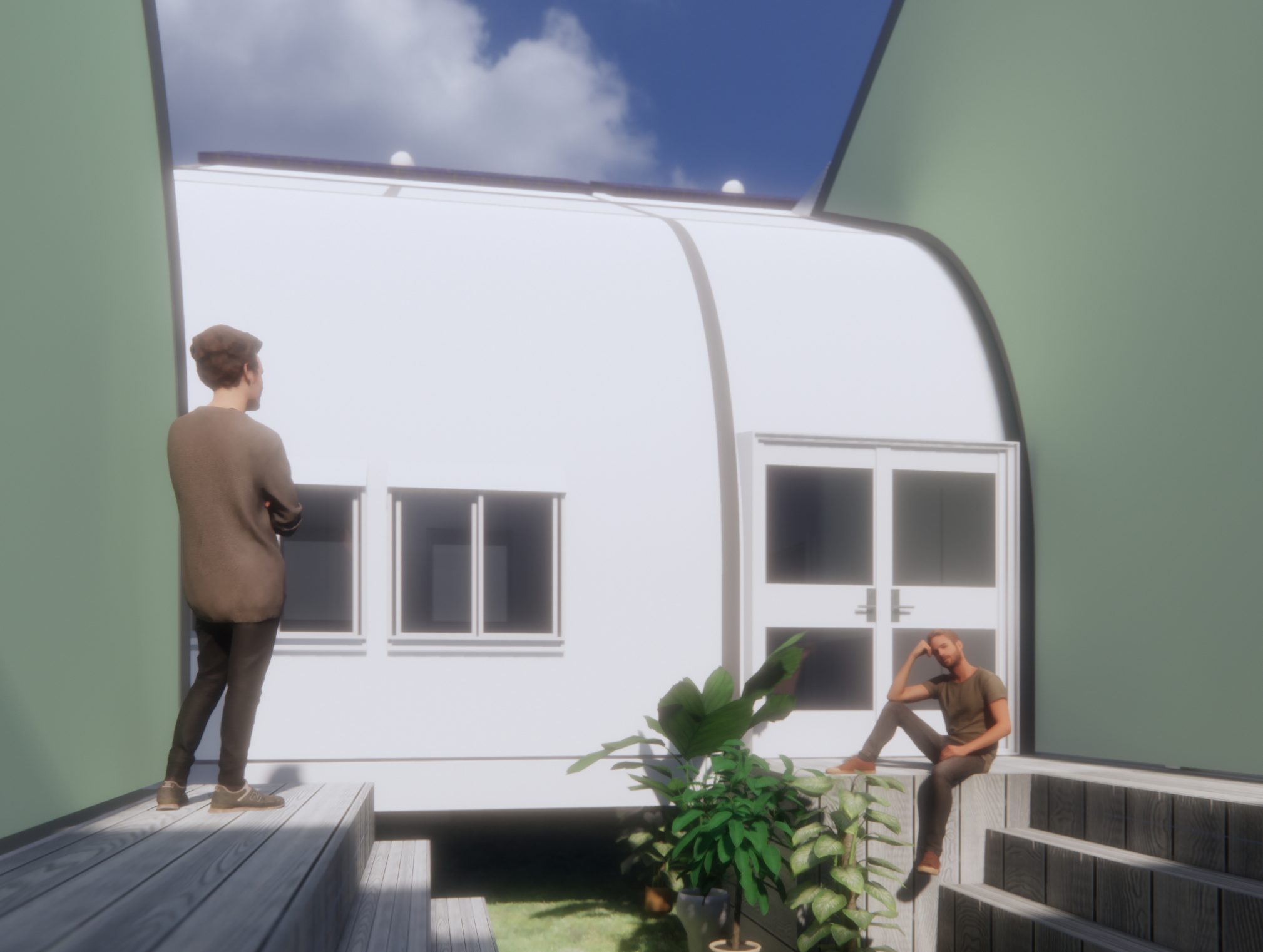
The range of lodging sizes offered by this concept would allow these modules to be deployed in various combinations at other sites, and more easily configured to a wider range of site constraints than would be possible with large, longhouse-style facilities. This community is designed to be very resource-sufficient, employing a combination of strategies: daylighting; passive ventilation and cooling; on-site energy generation; two raised gardens; composting toilets; and rainwater capture for non-potable use. It is important to note that Santa Ana does not typically receive sufficient rainfall year-round to meet anticipated drinking and hygiene needs through rainwater alone, so the majority of water used onsite will be delivered and held in localized cisterns, refilled as needed (weekly, or monthly, depending on population levels). On balance, the relatively low demand on municipal resources combined with a potential net positive output of energy, food crops and compost means this community will leave a minimal footprint, all while working toward a better future.
 dolina